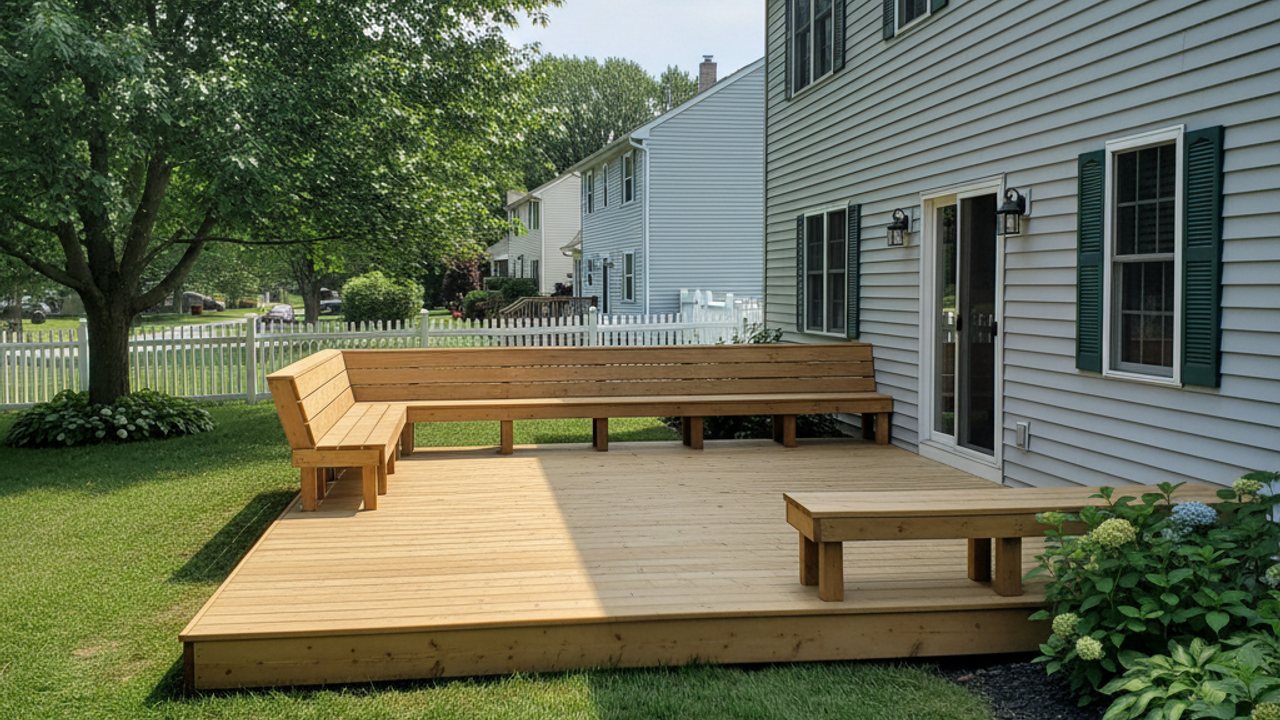
A deck job in Park Slope is not the same job as a deck job in Bay Ridge or out in Marine Park, even though both might end up being a 12x16 platform with a set of stairs. The lot size is different, the soil under the yard is different, and what the Department of Buildings wants to see on paper is the same city-wide but gets applied differently depending on the block. If you're trying to pick a builder for this kind of work in Brooklyn, most of what separates a good one from a bad one has nothing to do with how the finished deck looks in a photo.
Ask who is pulling the permit, and for what
Most attached decks in New York City need a permit filed with the Department of Buildings, and that filing has to come from a licensed contractor or a filed representative, not a handshake. A builder who tells you the permit isn't required for your job might be right, some small freestanding platforms under a certain height and footprint are exempt, but they should be able to tell you exactly why yours qualifies rather than just waving it off. If they're vague about inspections, that's worth pressing on. A permitted deck job usually gets at least two inspections: one after the footings are dug and before concrete goes in, and one at framing before the decking boards go down. Skipping the first inspection because it's inconvenient is how you end up with a deck that technically doesn't exist on paper, which becomes your problem the day you try to sell the house.
What's happening below grade matters more than the railing
New York's frost line runs deep, deep enough that footings for an attached deck typically need to go down 42 to 48 inches below grade to sit below where the ground freezes and thaws. A footing poured shallow will heave over a winter or two as the ground around it moves, and you'll feel it in a rail post that's suddenly out of plumb or a set of stairs that no longer meets the patio evenly. Brooklyn lots also carry a lot of fill. A lot of the borough was built up over old marsh, farmland, or graded with construction debris from a hundred years of rowhouse building, so a builder digging footings should be checking that they've hit undisturbed soil, not just stopping at a round number. Ask how deep they're going and why. If the answer is "however deep the last job was," that's not an answer.
How they plan to attach to your house
Most Brooklyn decks are attached decks off the back of a rowhouse, brownstone, or a detached house with a narrow yard, and the ledger board, the piece that bolts the deck to the house, is where a lot of failures start. On an older house with brick or a parged foundation wall, you can't just lag-bolt into the masonry and call it structural. It usually needs to tie into the house's rim joist or framing, sometimes with through-bolts, and it needs to be flashed properly so water doesn't sit behind it and rot the band board over the next few winters. A builder who glosses over this part, or who can't describe how they're flashing the ledger, is telling you they haven't thought about the one connection that holds the whole structure to your house.
Material choices, and being honest about what they cost later
Pressure-treated pine is still the most common decking material in Brooklyn because it's the cheapest to install, but it has to be stained or sealed every two to three years or the boards start to gray and check. Composite decking costs more up front, holds its color longer, and doesn't require sealing, but darker composite boards get hot enough in July and August sun that you'll want to know that before picking a color for a deck with no shade over it. Ipe and other hardwoods show up on higher-end jobs because they last for decades, but they're heavy, they require pre-drilled fasteners, and a builder who hasn't worked with them before will fight the material the whole way through. None of these is the wrong choice. What matters is whether the person you're hiring tells you the upkeep and cost honestly instead of steering you toward whatever they already have in the truck.
Signs to walk away from
A quote that comes in far below everyone else's is usually missing something, and it's often the permit, the proper footing depth, or insurance. Ask for proof of liability insurance and worker's comp before anyone sets foot on your property, not after. Walk away from anyone who won't put the scope of work in writing, including footing depth, ledger attachment method, and decking material by name and brand. Be cautious of a builder who has never worked on a landmarked block if your house sits in a historic district like Fort Greene, Clinton Hill, or parts of Ditmas Park, since visible work there can trigger a different level of review. And if a builder tells you they'll figure out the permit later, that's not a shortcut, that's a decision to leave you holding the risk.
A good deck builder in Brooklyn will walk your yard, look at how water moves across it after a heavy rain, check what's already attached to your house, and give you a straight answer about depth, materials, and timeline before you sign anything. That's the groundwork we go through on every job at Ace Deck Solutions, and it's worth asking any builder you're considering to do the same.